
Last Updated on: 17th February 2025, 07:32 pm
Pretoria, in the Gauteng province, is the administrative capital of South Africa. It was founded in 1855 by Marthinus Pretorius and named in honour of his father Andries Pretorius, the Voortrekker leader.
It became the capital of the South African Republic (Transvaal) (Dutch: Zuid-Afrikaansche Republiek (ZAR)) in 1860 when the Volksraad held its first meeting there. In 1910, it became the administrative capital of the Union of South Africa.
Owing to its Boer origins, Pretoria has traditionally been more Afrikaans than its neighbour Johannesburg, about 50 km (31 mi) to the south. It is a government city and therefore home to many civil servants and foreign embassies.
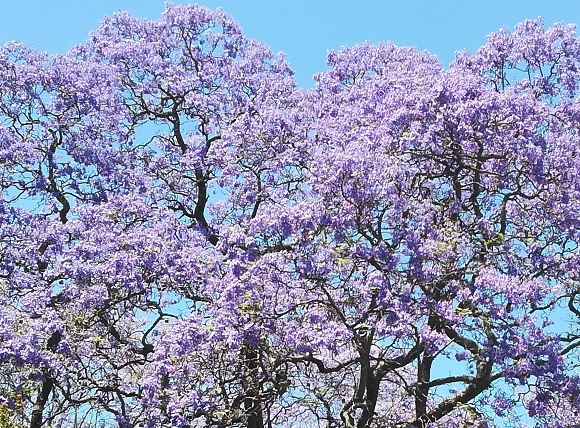
Pretoria is known as the Jacaranda City owing to the beautiful display of masses of purple jacaranda blossoms every year. The jacarandas usually bloom from the beginning of October to mid-November, but this may vary depending on rainfall and temperatures.
Below is my selection of the top reasons to visit Pretoria.

Voortrekker Monument
This imposing granite monument was built to honour the thousands of Voortrekkers (pioneers / settlers) who left the Cape Colony between 1835 and 1854. The Voortrekkers were mainly Dutch-speaking farmers (Boers) who migrated into the interior to escape British rule. This migration is known as the Great Trek and was a key event in the history of South Africa.
There was a time when the Voortrekker Monument was a symbol of Afrikaner nationalism and was therefore divisive. It is now rather seen as a symbol of Afrikaner heritage.
The architect was Gerard Moerdijk (also spelt Moerdyk) and the monument was inaugurated in 1949.
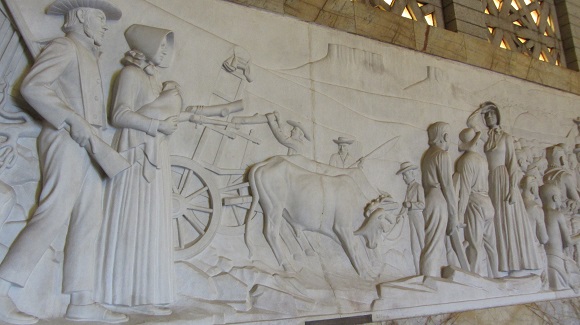
You enter the Hall of Heroes, which has an extensive marble frieze running along the walls depicting the history and daily life of the Voortrekkers.
To get to the top of the monument, proceed up the spiral stairway or take the lift. Outside, from the balcony, there are great views of Pretoria: looking northwards you will see the city centre, Union Buildings and UNISA.
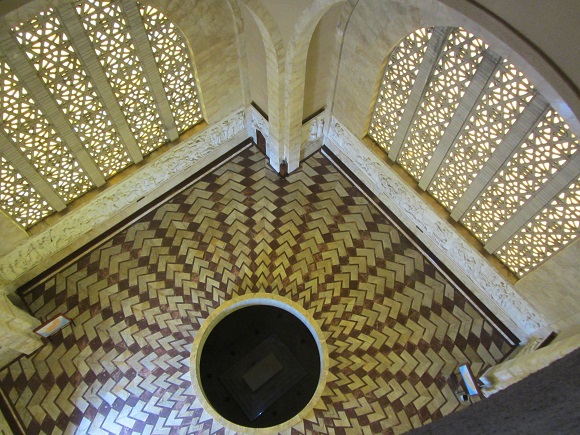
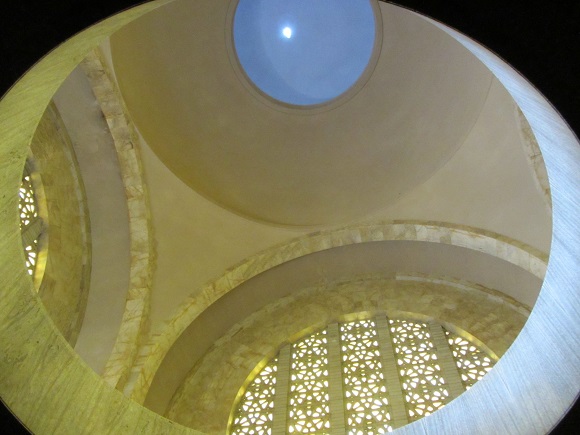
Continue a short way further upwards to the dome, where you can look deep down into the interior of the monument.
There is an opening in the dome through which a beam of sunlight shines directly onto the Cenotaph at midday on 16 December every year. This commemorates the victory of the Voortrekkers at the Battle of Blood River, which took place on 16 December 1838.
Below the entrance level, is the Cenotaph Hall. The Cenotaph (empty tomb) is the symbolic resting place of the Voortrekkers who died during the Great Trek.
The famous wall tapestries depicting the Voortrekkers, with more than 3 million stitches, are on display here as well as several artefacts from the Great Trek.
The museum is another level down in the basement.
For more detailed information, please visit the official site of the Voortrekker Monument.
Freedom Park
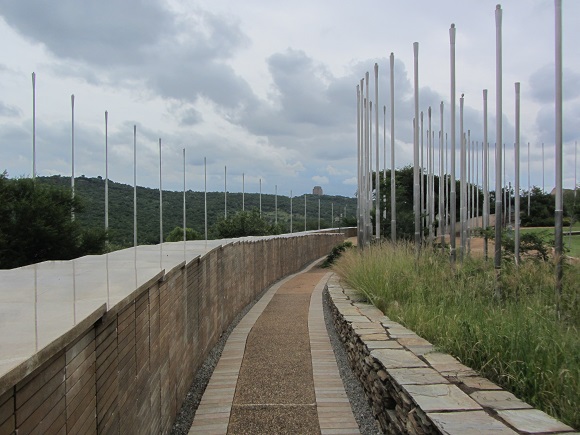
“Freedom Park is a monument to human rights, dignity and freedom, and a memorial to those who sacrificed their lives to secure liberty. It tells the South African story, starting 3.6 billion years ago, at the dawn of humanity, through to the rise of African civilisations, colonialism, the struggle against apartheid, and present-day democracy.” [1]
Reconciliation Road was constructed to link Freedom Park and the Voortrekker Monument, but at time of writing, it is no longer open. Freedom Park therefore needs to be accessed via the poorly maintained suburb of Salvokop.
The key elements of the park are highlighted below.
The museum forms the main entrance at the base of the hill. It is a striking angular building which is overlaid with copper sheeting and was designed to resemble a series of boulders.
The Freedom Park interactive museum, //hapo Museum, “explores the heritage of southern Africa dating back some 3.6 billion years. It walks visitors through history, through seven epochs, from the Earth’s infancy to present-day South Africa.” [1]

To get to the other elements of the park on the hilltop, you can walk up the pathways, or drive up the hill.
The curves and rock of S’khumbuto, the main memorial, integrate the site with the surrounding landscape. It is the Reed sculpture, comprising almost 200 metal “reeds”, that makes the park visible from afar.
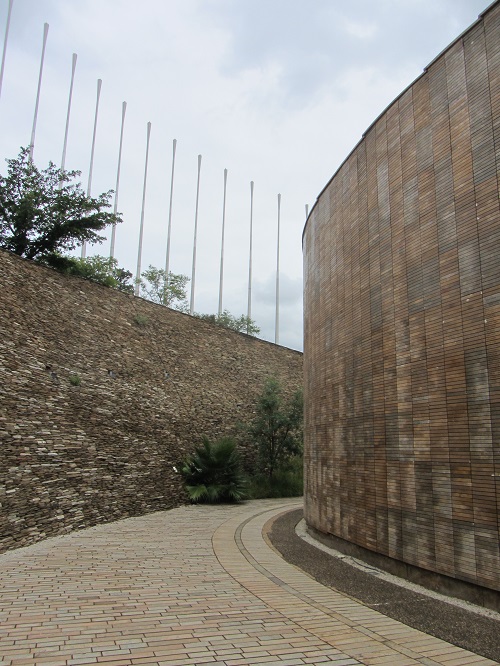
The distinctive Wall of Names is clad with sandstone blocks inscribed with the names of those who lost their lives in specific conflicts as well as the names of those who played a significant role in some of these conflicts.
Isivivane is the spiritual resting place for those who helped liberate South Africa. It is “made up of the Lekgotla – the meeting place, built around the uMlahlankosi tree, and the Lesaka – the burial ground, marked by boulders from around the country.” [1]
Union Buildings
Still to be reviewed.
References:
- https://www.freedompark.co.za/ retrieved 20210205