
Last Updated on: 17th February 2025, 07:50 pm
Greece is considered by many historians to be the cradle of Western Civilization. Athens, one of the glories of the ancient world, is now the capital of Greece and its largest city.
Athens is very walkable from a tourist perspective as many of the main sites are relatively close to one another. For longer distances, I found the metro easy to use.
Panathenaic Stadium

This stadium, made of marble, was re-built for the first modern-day Olympics Games in 1896. It is an accurate reconstruction of the stadium built in the 2nd century AD to host the Panathenaic Games, on the site of an even more ancient stadium.
This stadium is the place where the Olympic flame is transferred from Greece to the Olympic Games host country.
Temple of Olympian Zeus

The Temple of Olympian Zeus in Athens was one of the largest ancient Greek temples ever built. The base dates from the 6th century BC and further construction took place on-off over the centuries with Roman Emperor Hadrian completing it in the 2nd century AD.
Of the 104 original Corinthian columns, only 15 remain standing, so some imagination is required to visualize its previous grandeur.
You will see Hadrian’s Arch as you look towards the Acropolis.
Filopappou Hill

This treed hill provides an escape from the city but most importantly, great views of the Acropolis.
Socrates is said to have been imprisoned here, but this has largely been discredited.
The Acropolis of Athens
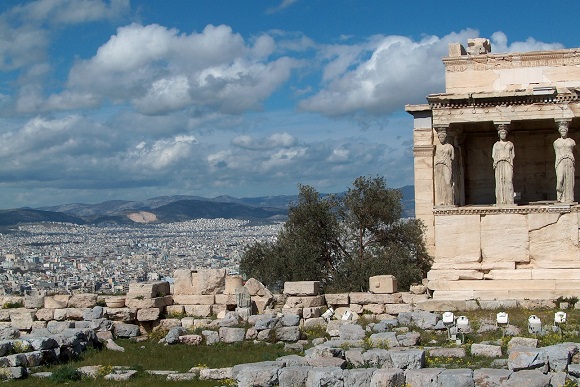
The Acropolis refers to the collection of amazing ancient buildings located on the flat-topped rocky outcrop which rises above the city.
Even though the hilltop has been developed for thousands of years, the current buildings were erected in the 5th century BC. They include the iconic Parthenon (temple dedicated to Athena), the Propylaea, the Erechtheion and the Temple of Athena Nike.
These elegant buildings were admired in antiquity and also inspired many neoclassical buildings of the world.
The Acropolis can be accessed from different directions:
- If you approach the Acropolis from the southern side, it is an easy walk up the hill passing the Theatre of Dionysus (an ancient Greek theatre) and the Odeon of Herodes Atticus (built in the 2nd century AD, it has been partially restored and is used for modern-day performances).
- You can walk through the Ancient Agora (first check if the southern gate (Theorias Street) is open) or walk next to the Ancient Agora.
- Walk up through the Plaka district and then westwards.
The Areopagus is a rocky outcrop located north-west of the Acropolis. In classical times, it was the location of a court, also called the Areopagus. Go up for views over the Ancient Agora.
Ancient Agora of Athens

The Agora was the heart of ancient Athens: a public gathering area where administrative, political, judicial, commercial, social, cultural, and religious activities took place. Socrates and Plato are known to have frequented the Agora and Saint Paul visited.
Highlights are:
- Stoa of Attalos – originally from the 2nd century BC, it housed many shops and its spacious colonnades provided a sheltered place to meet. It has been reconstructed and it is good to get a feel for the original building as opposed to a ruin. It now houses the Museum of the Ancient Agora.
- Temple of Hephaestus – one of the best-preserved ancient temples in Greece, probably built in the 5th century BC.
Acropolis Museum

The impressive (new) Acropolis Museum is south of the Acropolis. A lot of thought has gone into the design of this modern building and its exhibits. For example, the upper floor is oriented in the same direction as the Parthenon, with views of the Acropolis.
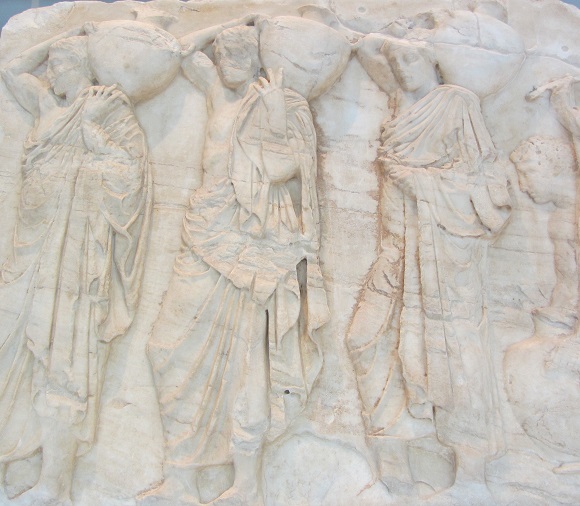
The Parthenon Gallery combines originals with copies to provide the most complete representation of the Parthenon sculptural objects in the world.
Monastiraki Square

Monastiraki Square is usually a bustling hub. There are narrow streets leading off the square with restaurants and many souvenir-type shops.
The Monastiraki Flea Market takes place on a Sunday morning.
Syntagma Square

Syntagma Square (Constitution Square) is the large main square of Athens. On the east end is the Greek Parliament building (Old Royal Palace).
In front of the Parliament building is the Tomb of the Unknown Soldier. Here the presidential guard (the Evzones dressed in their eye-catching traditional uniform) change guard every hour on the hour.
You can walk along Ermou Street from Syntagma Square to Monastiraki Square. This section has mainstream shops and is a pedestrian zone almost all the way. It is vibrant in the evening when lots of people are out and about.
Plaka
Plaka is a characterful old neighbourhood built in the neoclassical style on the north-eastern slopes of the Acropolis. Spend some time wandering the somewhat confusing streets. There are many restaurants and shops as well as historical sites.
You may want to seek out the tiny neighbourhood of Anafiotika (just above Plaka) with its charming, whitewashed houses built by stoneworkers who came here from the Cycladic island of Anafi.
National Archaeological Museum of Athens

The National Archaeological Museum is the home of a huge collection of ancient Greek treasures: outstanding bronze sculptures, marble sculptures, gold jewellery, vases and more.
The museum is about 2 km north-east of Monastiraki Square.
Other top attractions in Athens are: Hadrian’s Library, Roman Agora with the Tower of the Winds, Keramikos, Mount Lycabettus, Benaki Museum, etc
Cape Sounion and the Temple of Poseidon
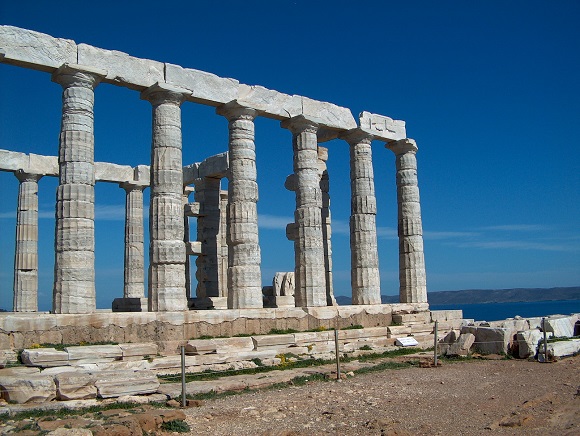
If you have more time, a trip from Athens along the coastal road of the Athenian Riviera to Cape Sounion is a good option. It is about 60 km from central Athens, so if you don’t have a car, it may be worthwhile to consider a tour.
The ancient Temple of Poseidon (440BC) at Cape Sounion is situated high above the Aegean Sea and it can easily be understood why this special setting was chosen as a sacred site.
One reply on “Top attractions in Athens”
This really makes me want to go again and explore. Never realised how many interesting sites I missed first time round