

Last Updated on: 15th June 2026, 12:55 pm
This self-drive itinerary covers most of the main attractions of central Namibia: Windhoek, Sesriem, Sossusvlei, Walvis Bay, Swakopmund, Cape Cross and the Welwitschia Plain.
The trip was completed without difficulty in a standard car (non-4WD). We were impressed with the quality of the untarred roads that we travelled on.

Day 1: Windhoek
Afternoon:
We arrived at Windhoek’s international airport in the afternoon and collected our hired car.
Historical centre
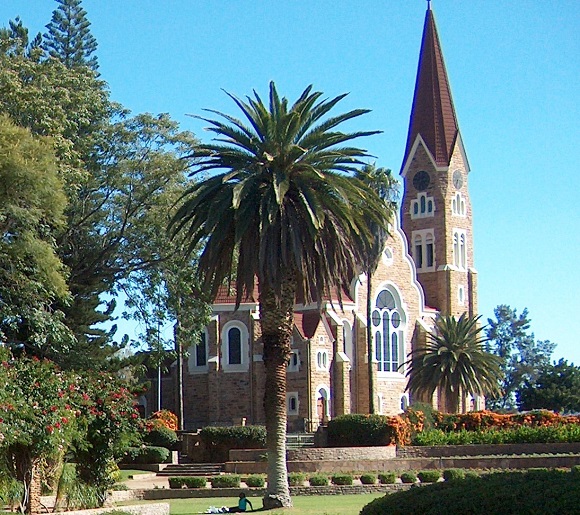
The quaint Christuskirche is a Lutheran church which was officially dedicated in 1910.
Close by are the Parliament Gardens as well as the ultra-modern Independence Memorial Museum. The museum focuses on the anti-colonial resistance and the national liberation struggle of Namibia.
Gibeon Meteorite Fountain
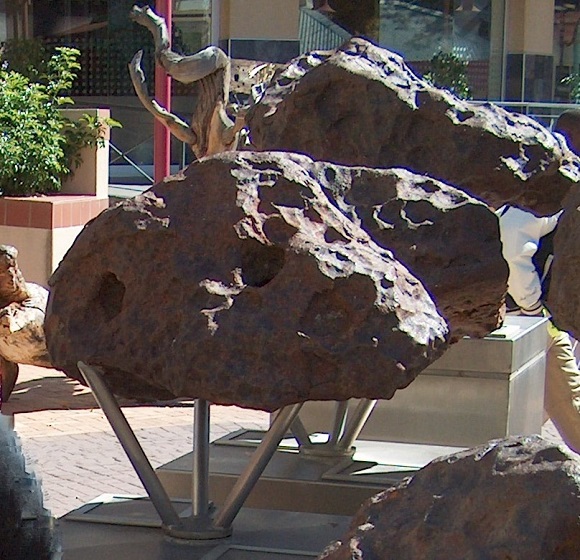
Fantastic ferrous foreigners from space!
At the Post Street Mall there is an outdoor sculpture of meteorites called the Gibeon Meteorite Fountain. These prehistoric iron meteorites were found in 1838 in the area of the village of Gibeon. 33 meteorites were meant to be displayed, but 2 were stolen before the sculpture was completed. A further 2 have apparently been stolen from the outdoor display.
Other activities available include cultural tours or a visit to the small Daan Viljoen Nature Reserve.
Overnight:
Windhoek
Day 2: Windhoek to Sesriem area
Morning and afternoon:
We travelled south on the B1 to Rehoboth and then on to Solitaire and the Sesriem area. Before descending Spreetshoogte Pass, stop at the viewpoint for great views over the expanse to the west.
The journey should take 4 – 5 hours depending on how long you stop along the way and where you are staying.
Where to stay when visiting Sossusvlei

Sossusvlei lies in the huge Namib-Naukluft National Park and the entrance gate is at Sesriem. From the gate, you drive about 45 km (28 mi) to Dune 45 or 60 km (37 mi) to the 2X4 parking area. The last 5 km (3 mi) is only passable for 4X4 vehicles. There is a charged shuttle service from the 2X4 parking area to Sossusvlei.
If you are an avid photographer and want to be at the dunes at sunrise or sunset, it would be best to choose accommodation within the main gate. This is because the main gate is only open between sunrise and sunset.
Sossus Dune Lodge owned by Namibia Wildlife Resorts advertises on their site as follows: “Situated within the Namib Naukluft Park, guests benefit from being able to reach Sossusvlei before sunrise and stay until after sunset ….” The same is true for the Sesriem Campsite, where the internal gate opens earlier than the external gate.
Those who are tempted by a sunrise hot air balloon safari may wish to stay close to one of the pick up points.
No matter where you stay, this remote area is special in its own right, with its striking stark scenery and the potential to see wildlife (albeit sparse).
Overnight:
Sesriem area
Day 3: Sesriem to Sossusvlei to Sesriem
Morning:
Sossusvlei
We decided not to rush for sunrise, but still wanted to take advantage of cooler early morning temperatures, so we arrived at Dune 45 at around 9:00. It is about 110 m (361 ft) high (according to Alltrails.com) and therefore a manageable climb with great views of the wide Tsauchab River valley.

After climbing Dune 45, we continued to Sossusvlei itself.
If you are feeling energetic, then Big Daddy is the dune for you. At about 325 m (1066 ft), it is one of the tallest dunes in the Sossusvlei area. I have seen pics of wonderful vistas from the top. You can come down the side of Big Daddy directly into Deadvlei.
Deadvlei, with its white salt crust, black dead camelthorn trees and red dunes, is stunningly unique. It is a more than 1km (0.6 mi) walk from the Deadvlei parking area.
The tallest dune in Namibia is Dune 7 in the Sossusvlei area.
We climbed Big Mama dune on the opposite side of Sossusvlei and enjoyed the perspectives from there. Don’t be put off by the name; it is not particularly high (+-100 m (328 ft)). We had the dune to ourselves; I suppose most others were sensibly out of the sun by that time.
We were there at the end of April and it was hot. It is essential to plan for sun protection and take lots of water. I have read reports of wind at times, so factor that as a possible scenario. Before heading back, we enjoyed our pre-packed lunch under the trees in the picnic area.
Sesriem Canyon
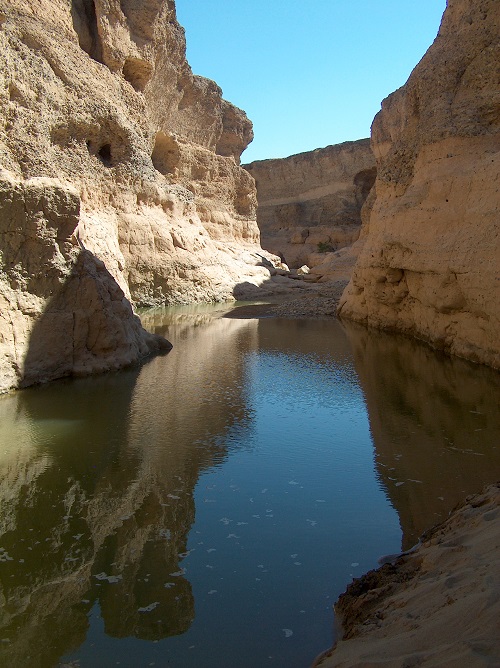
Sesriem Canyon is a small canyon about 1 km (0.6 mi) long and 30 m (98 ft) at the deepest point. It is carved by the Tsauchab River, the same river that terminates at Sossusvlei in times of heavy rainfall. It is about 4 km (2.5 mi) from the Sesriem gate. We descended into the welcome shade and walked downstream to the pools.
Overnight:
Sesriem area
Day 4: Sesriem to Swakopmund
Morning and afternoon:
Before setting off later in the morning, we were fortunate to see hundreds of Namqua sandgrouse fly in to drink water from a tiny pond.
We drove from the Sesriem area to Swakopmund via Solitaire. Solitaire is such a small settlement that it is surprising that it makes it onto maps! Nevertheless, it is the only settlement between Sesriem and Walvis Bay, so it is a good place to fill up with fuel and stock up on snacks.
Keep a look out for the “Tropic of Capricorn” sign along the way.
Between Swakopmund and Walvis Bay there is a narrow strip of sand dunes running north to south. Adventure companies in Walvis Bay and Swakopmund offer activities on these dunes.
The coast has a desert climate (very little rainfall) but the temperatures are mild owing to the effects of the cold Benguela current. There are often fogs, mists and low clouds especially early in the day.
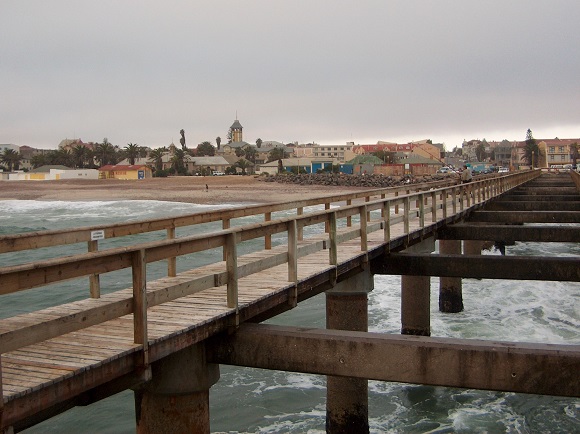
Swakopmund is a charming town that retains its original German character. We explored on foot.
Overnight:
Swakopmund
Day 5: Swakopmund
Morning:
Walvis Bay
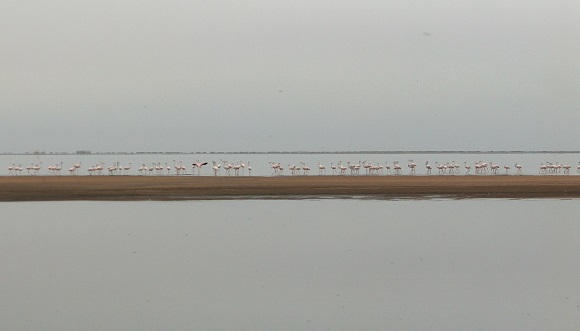
We drove south to Walvis Bay as we hadn’t stopped there the day before. It was a grey morning that was enlivened by seeing flamingos on the sand banks in the lagoon. There are salt farming pans nearby.
Several other activities are on offer: boat trips to see seals and dolphins, 4WD trips to Sandwich Harbour where the desert dunes meet the sea, adventure activities on the dunes, etc.
Contrary to popular belief and many internet posts, Dune 7 (a short distance east of Walvis Bay) is not the highest sand dune in Namibia. Do not expect a wilderness experience at Dune 7 because of its accessibility and the adventure activities that take place there.
We returned to Swakopmund for lunch.
Afternoon:
The Skeleton Coast is often used to refer to the entire Namibian coast. Technically, it is the length of coast from Swakopmund, north to the Angolan border and should not be confused with the Skeleton Coast National Park which lies in the northern part of this area.
Cape Cross Seal Reserve
The drive to Cape Cross is 120 km (75 mi) through a rather bleak landscape.
Cape Cross is named after the stone cross (padrão) planted by Portuguese explorer Diego Cão. He landed here in 1485/1486 on his second expedition south of the equator.
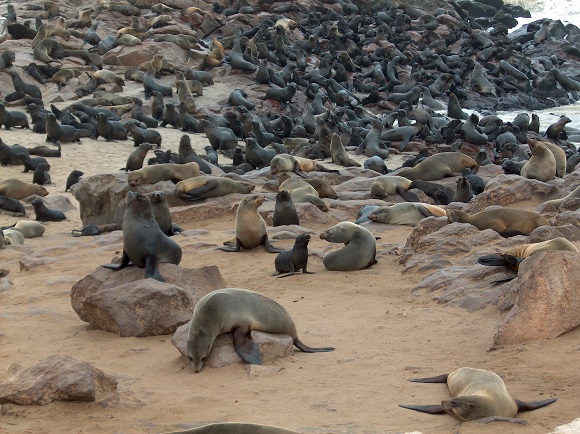
The reserve is home to one of the world’s largest colonies of Cape fur seals, with the most seals present during the breeding season in November and December. There are walkways which allow for good views of the seals. Some people complain about the smell, but that is nature!
Sustainable seal harvesting takes place in the reserve annually under the auspices of the Ministry of Fisheries and Marine Resources. As a tourist, you will obviously and fortunately not witness this as the culling takes place before the park opens.
Even though it was autumn it was cold on the coast. We popped into the nearby Cross Lodge to warm up and have tea and cake.
Shipwrecks
Large numbers of ships have been shipwrecked along the coast but only a few have survived the elements and even fewer are easily accessible.
Overnight:
Swakopmund
Day 6: Swakopmund to Windhoek
Morning and afternoon:
Welwitschia Drive
The Welwitschia Drive covers the area known as the Welwitschia Plain in the Namib-Naukluft Park.
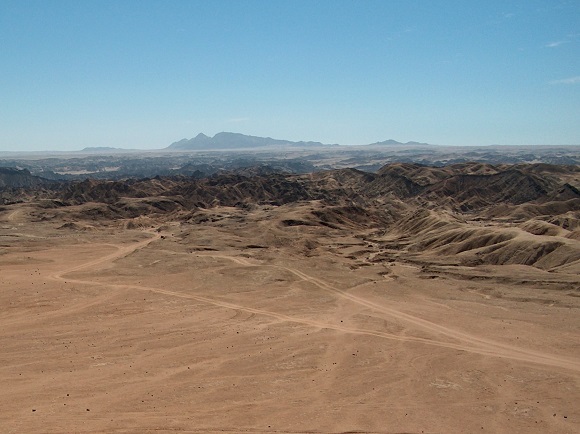
A route has been marked highlighting several points of interest, the most notable being the largest and oldest welwitschia in the area. Welwitschias are not particularly attractive, but I think that a plant that is at least 1000 years old deserves a visit!
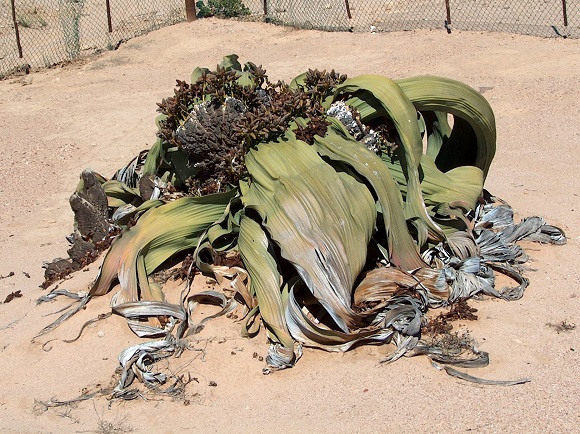
Commenting on the Welwitschia mirabilis, botanist Alice Notten says, “It is one of the few things on Earth that can truly claim to be one of a kind. There really is nothing like it.” [1]
The Namibian Coat of Arms even features a welwitschia.
As we were already on the C28, we decided to continue on this road to Windhoek, instead of doubling back to the tarred main route, the B2. This was an error: the untarred road surface was fine, but there was a long section (apologies, I did not measure how long) of little hills and steep valleys that made for slow going.
As per Google Maps, the C28 route from Swakopmund to Windhoek is 325 km (202 mi) long and should take about 5 hours. The B2 tarred route is 360 km (224 mi) long and should take 3.75 hours.
A top attraction in central Namibia that we did not visit on this itinerary is the Spitzkoppe. The Spitzkoppe is a group of isolated bare granite peaks and rock formations about 40 km (25 mi) by road off the B2 between Swakopmund and Windhoek.
Overnight:
Windhoek
References:
You may also like:
Northern Botswana and north-eastern Namibia self-drive itinerary – 2 weeks
Mapungubwe National Park (in South Africa)
10 replies on “Central Namibia road trip itinerary 6 days”
Hi,
Thank you for your itinerary, I just wonder If you know when the best time is to do this trip.
Hi Anette, the answer is quite complicated. Many people prefer to visit Namibia in winter when it is cooler and there is low chance of rain. You may however experience cold temperatures at night. The fog in Walvis Bay and Swakopmund is generally worse in winter, except when the east wind blows, which may bring a sandstorm! Sossusvlei is also impacted if the east wind blows. They say that the very best time to visit Sossusvlei is March / April / May. So, I think most people would agree that autumn, winter or spring would be a good time to visit central Namibia.
Hi,
Thanks for this detailed Itinerary. I found you from Reddit and have been looking for details like this to make choices concerning 2×4 vs 4×4 and drive times, etc. Well done.
Thank you. I hope you have a wonderful trip!
Hi All ,how can I join this road trip in future,it is very interesting
Hi Jan, thank you for your message. I do not arrange tours – I write about trips I have been on and readers can use this information to help plan their travels if they wish. I hope you find a suitable group to join.
Interested in this trip arriving on windhoek around 25 August. Thank you.
Hi Grace, thank you for your message. I am however not a tour operator – I write about trips I have been on and readers can use this information to help plan their travels if they wish. I hope you enjoy your trip to Namibia.
I have done a very similar self-drive trip across Namibia. Lovely country, especially enjoyed the dunes!
That looks like a fascinating trip!